Artichokes with lemon and garlic


April 15, 2013

The season for artichokes is here!
I just love them. I cook them many different ways. This recipe is my best, and it’s very simple to make. There are several varieties of artichokes. If you can find baby artichokes, they don’t contain the choke and are more tender, so the preparation will be shorter. If you are using the larger varieties you will have to remove the beard, or the choke, the hairy internal area found just above the heart as well as all the tough outer leaves. Either way, all efforts related to artichoke preparations are always worth the effort. This dish is perfect as appetizer, antipasto or as an accompaniment to grilled fish or chicken.1-artichookes-CF024185

2artichookes-CF070624

Artichokes with lemon and garlic
Serves 4
Ingredients:
4 baby artichokes or 2 large artichokes
1 whole bulb of garlic
2 Tablespoons Kosher salt
1/4 cup (0.6 dl) lemon juice
1/4 cup ( 0.6 dl) olive oil

A few sprigs of fresh oregano,parsley or thyme

1 large pot 5 cup (1.18 liters) capacity or more with lid large enough to accommodate 3 cups (7 dl) water and 1 1/2 cup (3.5 dl) olive oil for cooking of the artichokes. Placed on a medium burner and bring to a boil.
Lemon wedges and fresh herbs for garnishing the platter.

Method:
Clove, peel and mince the garlic. Place the kosher salt on top of the garlic and using the side of your knife work the salt and garlic together into a paste. Remove the stems from the herbs and mince. In a bowl combine 1/4 cup (0.6 dl) of olive oil, all lemon juice with the herbs and garlic salt to make the artichoke rub.

Rinse and clean each artichoke. Remove any outer leaves which appear to be sad, dry or cracked particularly near the stem. Use a scissor to remove any tips of the out leaves that contain a thorn.

NOTE: Use only stainless steel knives or scissors when working with artichokes!
High carbon knives react chemically with artichokes, any artichoke surface they come into contact will turn black. If you are using baby artichokes cut the artichokes in half, should you be using the larger variety of artichokes, cut them in quarters. Remove the beard, the fuzzy hairs located just above the artichoke’s heart, this is easily down with a teaspoon. You need to work fast for artichokes oxidizes and change color. Lemon juice will help prevent this, so rub the whole artichokes thoroughly with the artichoke rub, and don’t forget to get in between the leaves.

Add artichokes into the pot that has water and olive oil boiling. Go ahead and toss any extra artichoke rub into the pot as well. Lower the heat to allow the artichokes to simmer. The liquid should just cover the artichokes, as a thumb rule, one part olive oil with 2 parts water. Let them simmer about 15-20 minutes, if you have the larger type of artichokes you probably will need more cooking time. To check if the artichoke is ready, pull a leaf close to the center, if the leaf come off easily, it’s done. If not, cook more and check every 5 min, if you have the really big artichokes the cooking will be about 40 min. When it’s ready, let cool slightly in the broth, eat them lukewarm or cooled.

To serve, choose a high lipped or edged platter. Arrange the artichokes in the center of the platter and drizzle some of that beautiful broth over the artichokes. Garnish with fresh herbs and lemon wedges. Serve with bread to soak up the good broth.4 artichookes-CF070675


Orata Pantesca al forno


April 9, 2013

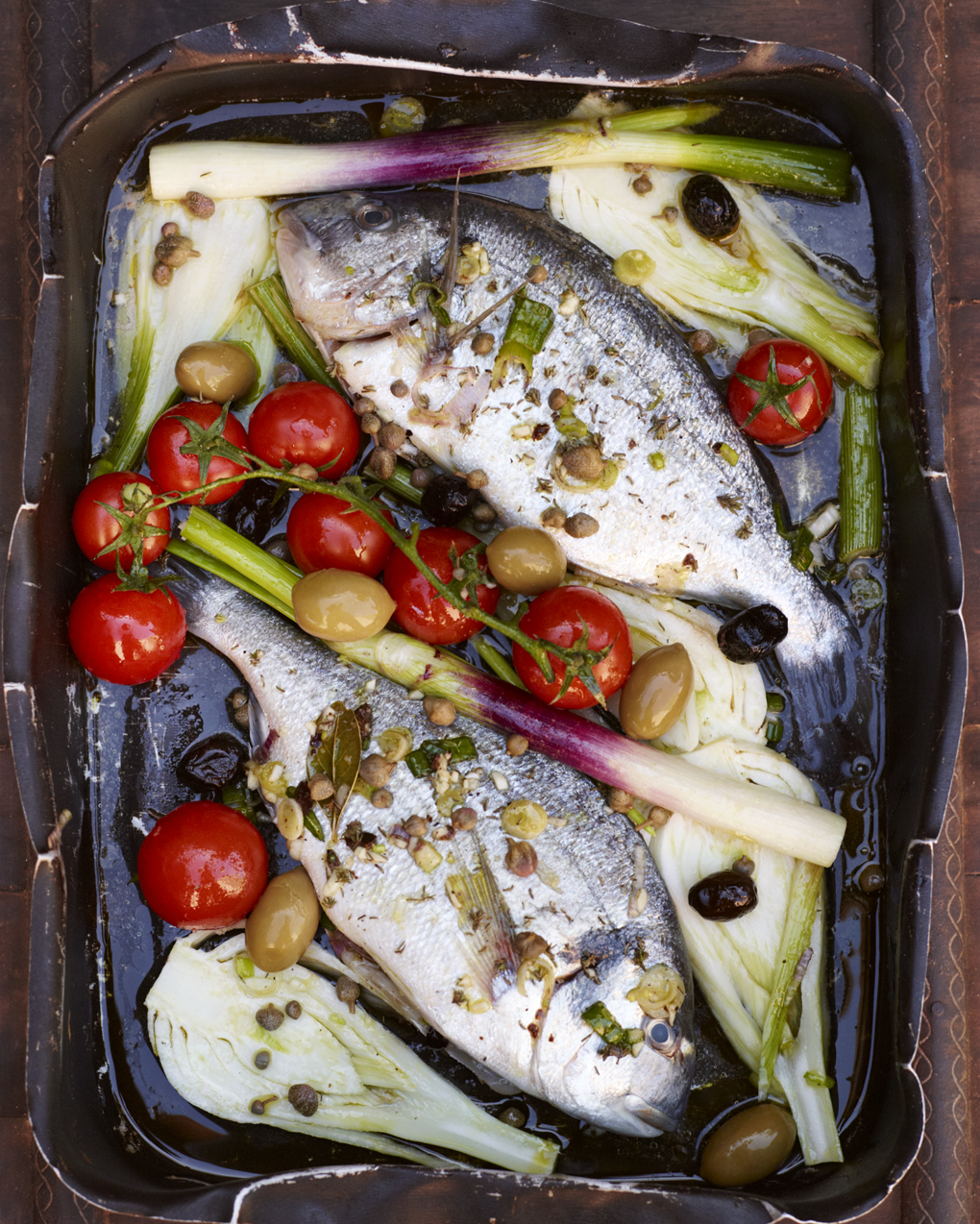
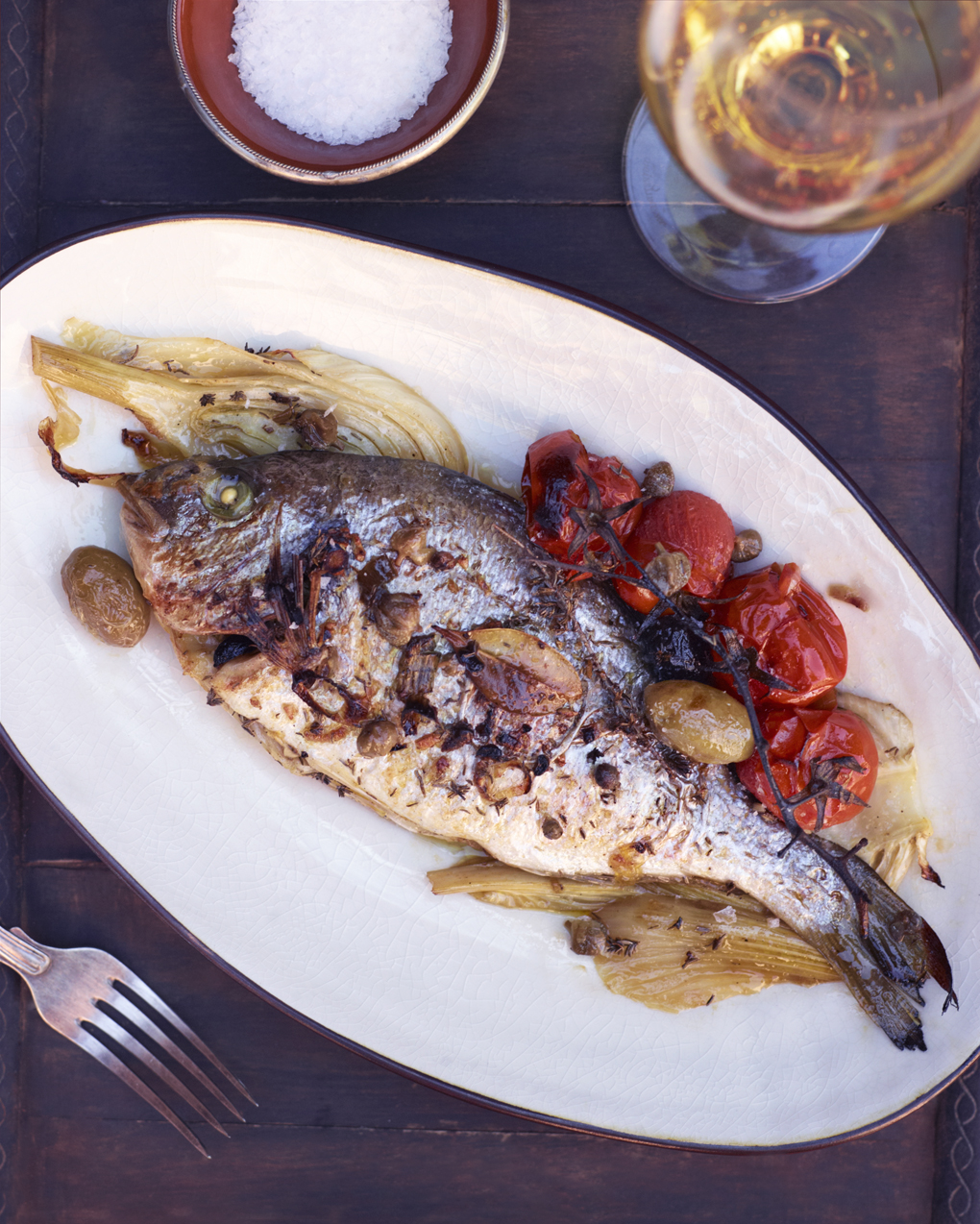
Orata in Italian means golden. In English this fish is called Gilt head (sea) bream. I’ve bought the same fish in markets in France where its name is Daurade (dorade royale), and many years ago I was vacationing in Calabria where it is known as it Pargo-Dorado… Here in Pantelleria this fish is referred to as Orata. By any name this is an absolutely lovely fish!

Put this fish on the barbecue or roast it in the oven. Orata blends well with any flavor. This week I was assigned to make a recipe with fish and olives so I filled it with sun dried black olives, Pantelleria capers, garlic and a lot of wild thyme that had I picked the day before. I cooked it in the oven for 30 min and it came out perfectly. Really, it was so good that we almost moaned as we ate.
This recipe can easily be used for other kinds of fish. When you cook the whole fish, don’t forget to eat that little part in the cheek on the side of the fish head. It may be little, but it’s the very best part.

I wish you all great week
Annaorata al fornoCF069021Orata Pantesca al forno
Serves 2
Ingredients:
2 each Orata fish 1 kilo or more in weight per fish (other names of the Orato: Dutch- Goldbrassen, East Germany- Dentis, Great Britian- Gill head Sea Bream)
1/4 cup (60 ml) olive oil
1 bay leaf
2 garlic cloves finely chopped or pressed
4 sprigs of thyme
4 sun dried olives pitts removed and cut into chunks
salt and pepper
2 Tablespoon capers from Pantelleria (soaked and drained)
10 olives of your choice
8-10 cherry tomatoes
1 medium sized fennel
1 spring onion
1/4 cup (60 ml) white wine

Method:
Remove the scales, innards and gills of the fish view this video for further instruction http://www.youtube.com/watch?v=YeXqdZYtF_A
Set and preheat the oven to 400 degrees F (200C)
In a small bowl mix:
Olive oil, garlic, 2 thyme sprigs crushed, the sun dried olives and one Tablespoon of the capers, salt and pepper (keep in mind that fish needs a little extra salt).

Make three cuts on the bias from the dorsal fin to the stomach starting from head to mid tail on both sides of the fish. (since fish has different thicknesses these slits will allow even heat distribution as well as area to add the flavorings) place the aforementioned flavorings inside the slits as well as into the body cavity of the fish. Pour the left over oil around and into the oven tray.Cut the fennel and onion into larger wedge uniform pieces as to withstand the high heat of the oven. Add them to the pan with the rest of the ingredients and finish off by pouring in the wine. Cover with Aluminum foil and place in the oven for about 30 minutes, the cooking time might vary depending on the size of your fish, after 30 minutes remove from the oven and uncover. At this time you want to use a fork or butter knife to check the fish to see if the meat has cooked to the bone. You check at the thickest part of the fish by sticking the fork or knife into the and look to see if the meat is light and a little flaky in the consistency, not translucent at the point where it meats the bone. If it’s not ready let it stay for another ten minutes uncovered. But be careful with the cooking time, in my opinion there is nothing sadder than overcooked fish.
orata al fornoCF069096Dinner plate http://indiska.com/
Capperi di Pantelleria http://shop.underthealmondtree.com/product/capers

Lemon Mousse


March 28, 2013

I asked what I could bring to the Easter buffet on Sunday. Dessert!
I thought about making a double chocolate cupcake. In Pantelleria cupcakes, as we know them don’t exist, so I thought it would be fun to contribute something that is not typical here. I started to bake.
I made up a recipe using really high quality chocolate. I must say they tasted divine … but to pipe the icing and make them look beautiful enough for the photo was another thing completely…holy cow!
In my mind I had Magnolia Bakery stylish art piece cupcakes decorated with these nice sugar daffodils (that I brought with me from NY). Not one came out as I had in mind, so we just ate them, Carlo, Igor and me. Carlo was euphorically happy about the fact that I would have to make them again to get them presentable for the blog! I will do them again and practice on my icing skills, in the future. I promise! An easier dessert is this Lemon Mousse. It will be perfect to bring to the table on Sunday.

Wishing you all a happy Easter,
Annalemon mousseCF025815
Lemon Mousse
Serves 4

Ingredients:
1 gelatin sheet
1 small bowl of cold water
1/2 cup (1.2 dl) lemon juice
3 egg yolks
1/2 cup (1.2 dl) granulated sugar
1 Table spoon lemon zest
1 cup (2.4 dl) cold heavy cream

Method:
With scissors cut the gelatin into uniform pieces and place in the cold water to soak for about 5 minutes or until it has a jelly like consistency.
Fill a small pot halfway with water and place on a medium heat. Allow the water to reach a calm boil, then turn the burner down to low heat.  This will be the bottom of your double boiler.
In a stainless steel bowl that can rest on top of the pot you used to boil water, place the egg yolks and sugar. Whisk as to combine the contents thoroughly.
Place this mixture on top of the water in the small pot and begin to whisk vigorously allowing them to become fluffy and cook but not to the point of scrambled eggs. Should the scramble occur, don’t panic. Add a teaspoon of cold water to the egg and sugar mixture and whisk again. The egg mixture will return to fluffy. Set aside.
Dump the water from the pot and add the gelatin, lemon juice, and zests over a low heat with a spoon stirring constantly melt the gelatin. When it has melted, remove from the heat and fold into the egg yolk and sugar mixture.
Whip with a hand mixer the heavy cream until it forms stiff peaks.
Fold lemon gelatin mixture and whipped heavy cream together.
Place the mixture into low rimmed glasses (see picture) as to allow ease of eating
Cover each glass with plastic wrap, then place them on a shelf in the refrigerator.
Allow to set for at least one hour.
Garnish and serve.

Lemon linguine


March 20, 2013

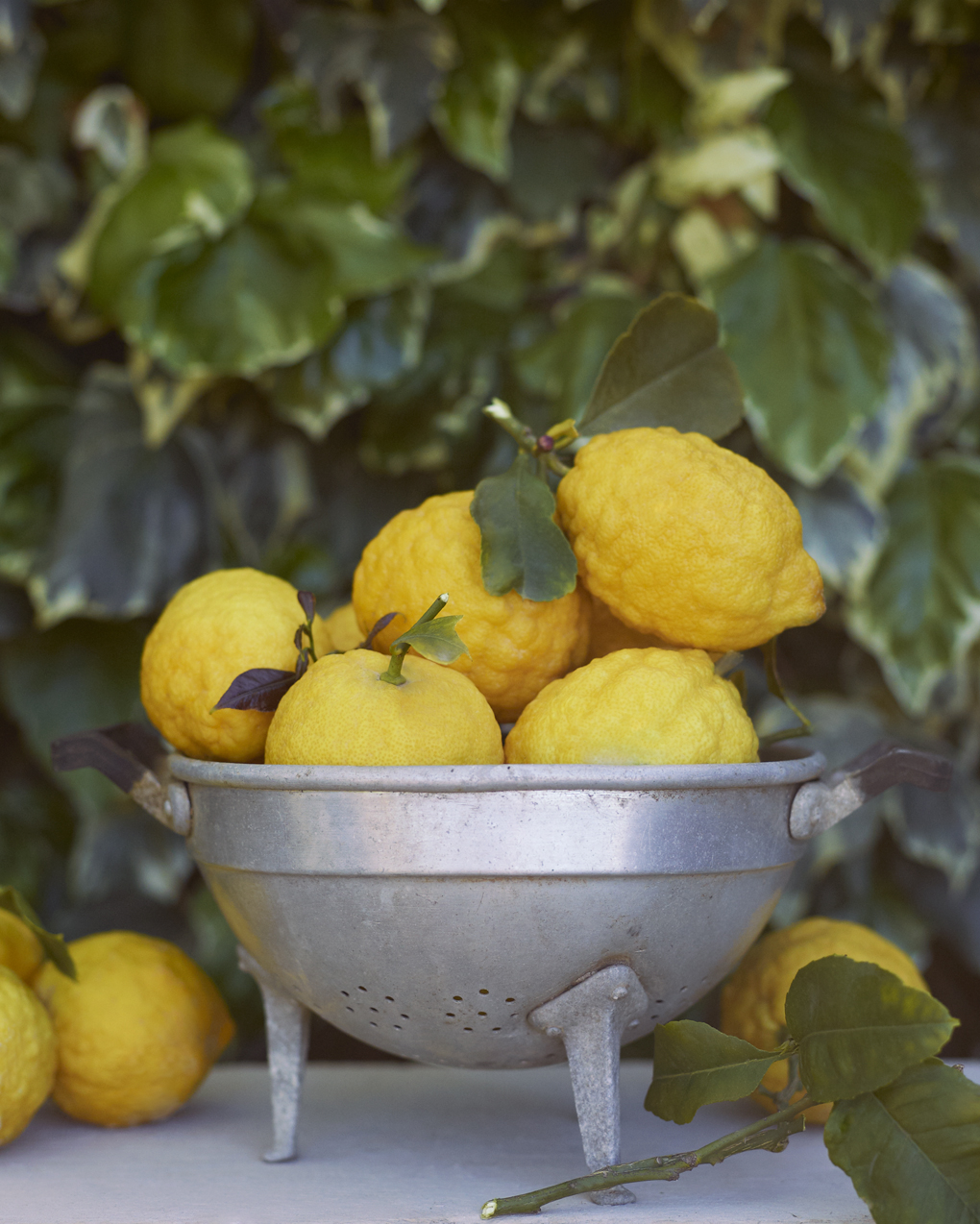
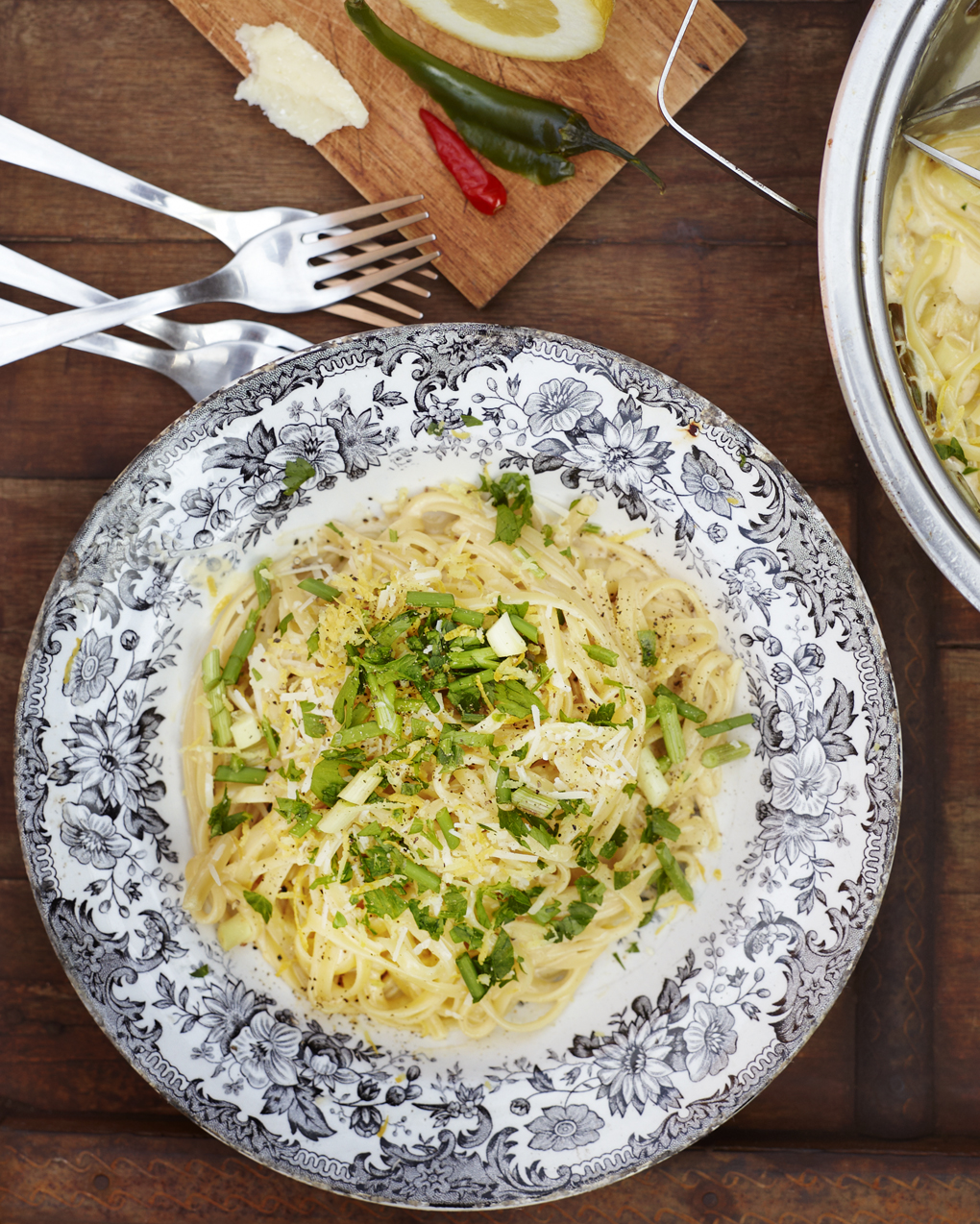
I’m happy it is still lemon season in Pantelleria. Here is a recipe for a simple and fast weekday pasta.
Buon appetito!lemons collianderCF024319Lemon linguine
Serves 4
Ingredients:
1 four liter or quart sized pot with lid, filled with water
1 pinch of salt
1 pound (500 grams) Linguine
1 medium sized saute or sauce pan
1 Tablespoon olive oil
4 small spring leeks finely minced
1/2 chili finely minced (add in the sauce if everyone enjoys spice or serve on the side for guests to add as they wish)
3 Tablespoons white wine (or a shot glass full)
3/4 cup (1.8 dl) heavy cooking cream
2 medium size lemons juice them for 1/4 cup lemon juice
salt and white pepper to taste
1 small bowl
2 egg yolks (room temperature)
1 tablespoon  lemon zest (use the 2 lemons before you juice them make sure there is no pith or white flesh attached)
1 cup (2.4 dl) grated Parmesan cheese
4 sprigs parsley, de-stemmed fine chiffonade
Method:
Fill the four quart or liter pot with water, add pinch of salt. Put the lid on top and place onto the largest burner on the stove top and turn the element onto the highest setting and allow the water to come to a rolling boil
Once water is boiling remove the lid and add the pasta to the water. Stir until all the pasta has descended into the water. Make a note of the amount of time suggested for cooking the pasta on the package and you will want to remove the pasta from the water anywhere from 30 to 60 seconds before the suggested cooking time. If you are tasting the pasta to decide if it has finished you want to remove it at a a slightly firmer texture then al dente.
Place a colander into the sink in preparation to drain the pasta when it is cooked.
Place your sauce pan over medium heat and add the olive oil. When the oil is hot, saute the spring leek and chili pepper. Once soft add white wine and lemon juice allowing to reduce by half. Next you add the room temperature heavy cream and lower the heat underneath the pan. Add half of a ladle of pasta water to the reducing sauce. Add some salt and white pepper keeping in mind that the grated Parmesan cheese will add salt to the dish as well.
In a separate bowl you will whisk the egg yolk with a fork and add a couple tablespoons of the warm cream sauce while whisking. This is to temper the egg yolks so they do not scramble.When the pasta is ready drain in the colander and then add to the cream sauce in the sauce pan. Next stir in the tempered egg yolks, zested lemon, Parmesan cheese and the parsley.
Serve immediately!
lemon linguine-CF019404

Black eyed pea cassoulet with salciccia and sage


March 14, 2013

blackeyedpeas-CF050384

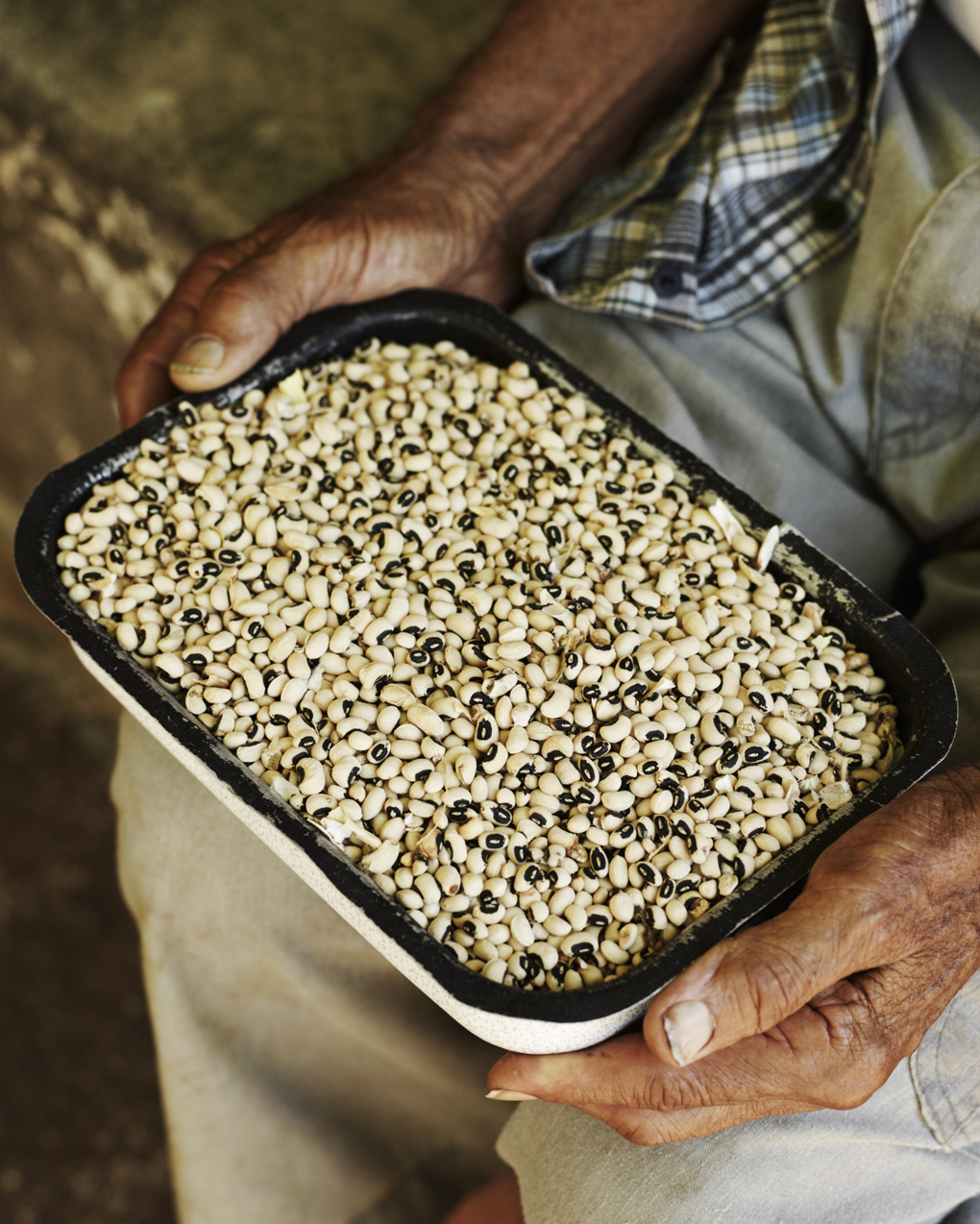
These lovely local beans (yes, black eyed peas are actually a bean) was harvested last spring and dried. The farmer who grows the beans is called Centesimo. That is his nickname. All men have nicknames in Pantelleria. Centesimo’s means penny, or cent.  His nickname makes reference to the fact that he is very thrifty and frugal. He harvests all his seeds from his own fruits and vegetables that he cultivates. Centesimo and his wife live and grow their produce in Scauri, a village in the south west part of Pantelleria. When my friend Ines and I visited them this summer we got a lot of lovely products. I still had these black eyed peas, and was happy to use them last night.

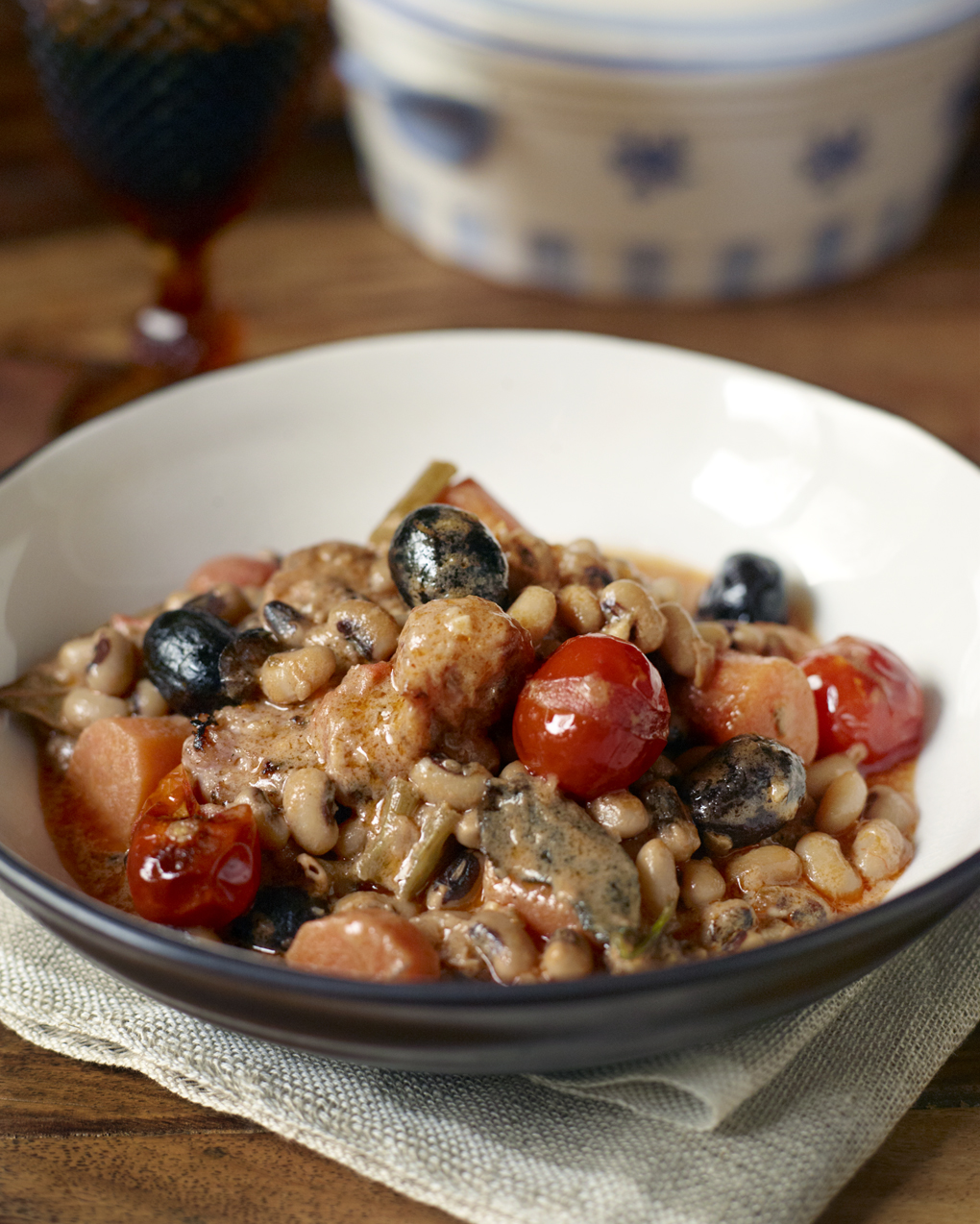
centesimo-CF050352 1Yesterday we had rain and hailstorms all day. The three of us, Carlo (the boyfriend), Igor (the dog), and I were freezing. We spent all day inside, reading, watching a movie and just chilled out in front of the fire.For dinner I cooked this bean cassoulet with salsiccia and sage. It turned out to be a perfect meal for this cold day.  

The black eyed peas need to soak for 6-8 hours before you start cooking.

Black eyed pea cassoulet with salciccia and sage
Serves 4-6
To soak the black eyed peas:
2 cups (4.8 dl) of black eyed peas
6 cups (14.4 dl) of cold water
Put the black eyed peas in a bowl or a container.
Pour over the water and cover with a lid or a dinner plate.
Let soak for 6-8 hours in the fridge.
The cassoulet:
1 medium sized yellow onion
3 cloves of garlic
2 Tablespoons olive oil
1 bay leaf
2 dried chili peppers crushed or 1 teaspoon dried chili flakes
2 medium sized carrots
1 stalk of celery
2 teaspoon salt
3 cups (7.2 dl) of white wine
2 cups (4.2 dl) of water
4 cups (9.6 dl) of soaked black eyed peas ( they will double in size after soaking)
17 oz (480 grams) salsiccia
1/2 cup (1.2 dl) of  cooking cream
12 cherry tomatoes
18 black olives
2 Tablespoons tomato paste
1 Tablespoon Dijon mustard
12 large sage leaves

Method:
Wash, peel and both the onion and garlic finely, saute in olive oil until golden and soft, add the bay leaf and chili flakes.
Wash, peel and cut the carrots and celery stalk in medium sized chunks and add to the onions with the black eyed peas, 2 cups wine,  2 cups water and 1.5 teaspoon salt.
Cover with a lid and cook on medium to low temperature for about 45 minutes then add the last cup of wine, continue cooking.

Add tomato paste, cream, sugar, Dijon mustard, cherry tomatoes and olives.
Sauté the salsiccia lightly in a skillet on the side then add to the bean stew.
Cook for another 20 minutes. Try the beans, they should be soft but not mushy,
you want them to have some texture. Crush the sage leaves and stir. Taste the stew before serving to see if more salt is needed. Serve with bread and red wine.

black eyed peas cassouletCF064656

Dinner plate http://indiska.com/se